Can plus-size brides rent designer wedding gowns in Singapore?
Yes—provided a boutique confirms that the exact designer gown fits your measurements and that any necessary alterations are permitted under its rental terms. For a 2026 wedding in Singapore, confirm those details before reserving: a designer name or dress-size label alone does not establish a suitable fit.
- Plus size wedding gown rental Singapore: choose by garment measurements and permitted alterations, not the size label alone.
- Carte Blanche offers designer wedding gown rental and purchase; confirm fit and rental terms for your chosen dress.
- Compare renting with sample-sale purchase when your preferred gown needs substantial changes.
- Overseas brides should confirm fitting arrangements and cross-border rental permission before making travel plans.
Why this matters
You deserve a dress you enjoy wearing, not an appointment spent apologising for your measurements. Start with the look you love, then ask which actual dresses offer a realistic fit.
For your 2026 shortlist, use the sizing-chart-to-perfect-fit guide alongside the designer’s own measurement instructions. Keep your measurements, preferred coverage and wedding date together when contacting a boutique. That gives the conversation a useful starting point without treating your usual clothing size as a technical specification.
A suitable rental is a dress that fits your body and your plans—not simply a dress that closes. Comfort while sitting, walking and celebrating belongs in the decision from the beginning.
Can plus-size brides rent designer wedding gowns in Singapore?
Yes, when a boutique can confirm a suitable garment and an acceptable fitting plan. Ask about the specific dress rather than whether a shop generally serves plus-size brides: a broad answer does not tell you how the bodice, sleeves or hips will fit.
Use these steps before committing to a rental for your 2026 celebration.
- Share your measurements. Start with 3 measurements: bust, waist and hips, taken according to the designer’s instructions. Ask whether the boutique also needs your height, upper-arm measurement or torso length for the dress you are considering.
- Identify the exact gown. Send the designer and style name or a product-page reference. Ask for the garment’s labelled size and relevant measurements, rather than assuming every dress from the same designer fits identically.
- Ask what you can actually try on. Establish whether the appointment involves the intended rental dress or another sample. A different sample can help you discuss styling, but it does not prove that the intended dress fits.
- Confirm alteration limits. Ask which changes are permitted, who assesses them and whether they must be reversible. Do not treat clips, an open fastening or a verbal reassurance as confirmation of the finished fit.
- Test movement and support. Sit, walk, lift your arms and turn in the dress. Explain your ceremony, meal and dancing plans so the fitting reflects how you will use it.
- Get the agreement in writing. Confirm the dress identity, fitting plan, collection and return arrangements, alteration responsibilities and relevant rental terms before you commit.
If a boutique cannot explain how the particular dress will fit, keep looking. You do not need to accept discomfort because a dress is described as bridal or designer.
Rental versus sample-sale purchase: which suits your plans?
Compare the complete arrangement, not just the headline quote. A rental and a sample-sale purchase solve different problems, especially when you need alterations or are travelling from overseas.
| Route | Best for | Main advantage | Main limitation | What to confirm |
|---|---|---|---|---|
| Designer gown rental | Brides who want temporary use and accept the agreed rental terms | You do not need to keep the gown after the wedding | Alterations and use must stay within the agreement | Fit, permitted changes, care responsibilities and return arrangements |
| Designer sample-sale purchase | Brides who want ownership or need changes that a rental agreement does not allow | Ownership removes the rental-return requirement | The existing sample still needs a realistic fit assessment | Garment condition, measurements, alteration feasibility and purchase terms |
Ask for an itemised total for each route. For rental, clarify alteration charges, cleaning responsibilities, refundable security arrangements and any circumstances that create additional charges. For purchase, consider alterations, cleaning, transport and what you want to do with the gown afterwards.
Buying does not automatically win. A purchased sample that needs unsuitable reconstruction is not a better choice than a rental that fits comfortably; equally, a rental with restrictive alteration terms might not meet your needs.
Carte Blanche is best for brides comparing designer wedding gown rental with purchase in Singapore. Its stated offering includes both routes, but the choice for a plus-size bride still depends on the individual dress and confirmed fitting arrangements.
For a 2026 wedding involving separate celebrations, explain every intended use before comparing quotes. Do not assume a rental covers an additional ceremony, a portrait session or overseas travel.
Why plus-size wedding gown rental suitability varies
The useful question is not whether plus-size bodies suit designer gowns. It is whether a particular garment can accommodate your measurements, movement and preferred styling.
- Garment measurements: A size label is a starting reference. Ask how the dress’s measurements relate to your own and where the fit needs professional assessment.
- Bodice construction: Boning, cups, seams and fastening design all belong in the fitting discussion. Ask where the support comes from and whether it feels comfortable on you.
- Fabric and lining: Check the complete dress rather than judging stretch or comfort from its outer fabric alone. Move in it before deciding.
- Alteration permission: A technically possible change is not necessarily permitted on a rented garment. Get both the fitting assessment and the boutique’s permission.
- Your wedding plans: Stairs, seated dining, dancing and travel create different practical questions. Describe the day rather than asking only whether the dress looks good standing still.
- Fitting access: Local appointments and overseas shopping require different arrangements. Confirm how fit will be assessed and who will handle any agreed adjustments.
You do not have to choose a silhouette intended to conceal your body. Choose the shape you like, then examine whether the actual dress supports that choice comfortably.
How should you assess fit during an appointment?
Give yourself permission to be specific. Saying that a neckline feels insecure or that you cannot sit comfortably is useful fitting information, not criticism of the dress or your body.
Use this sequence while wearing the shoes and undergarments you intend to use, where practical. Ask the fitter before introducing accessories that could mark or damage the gown.
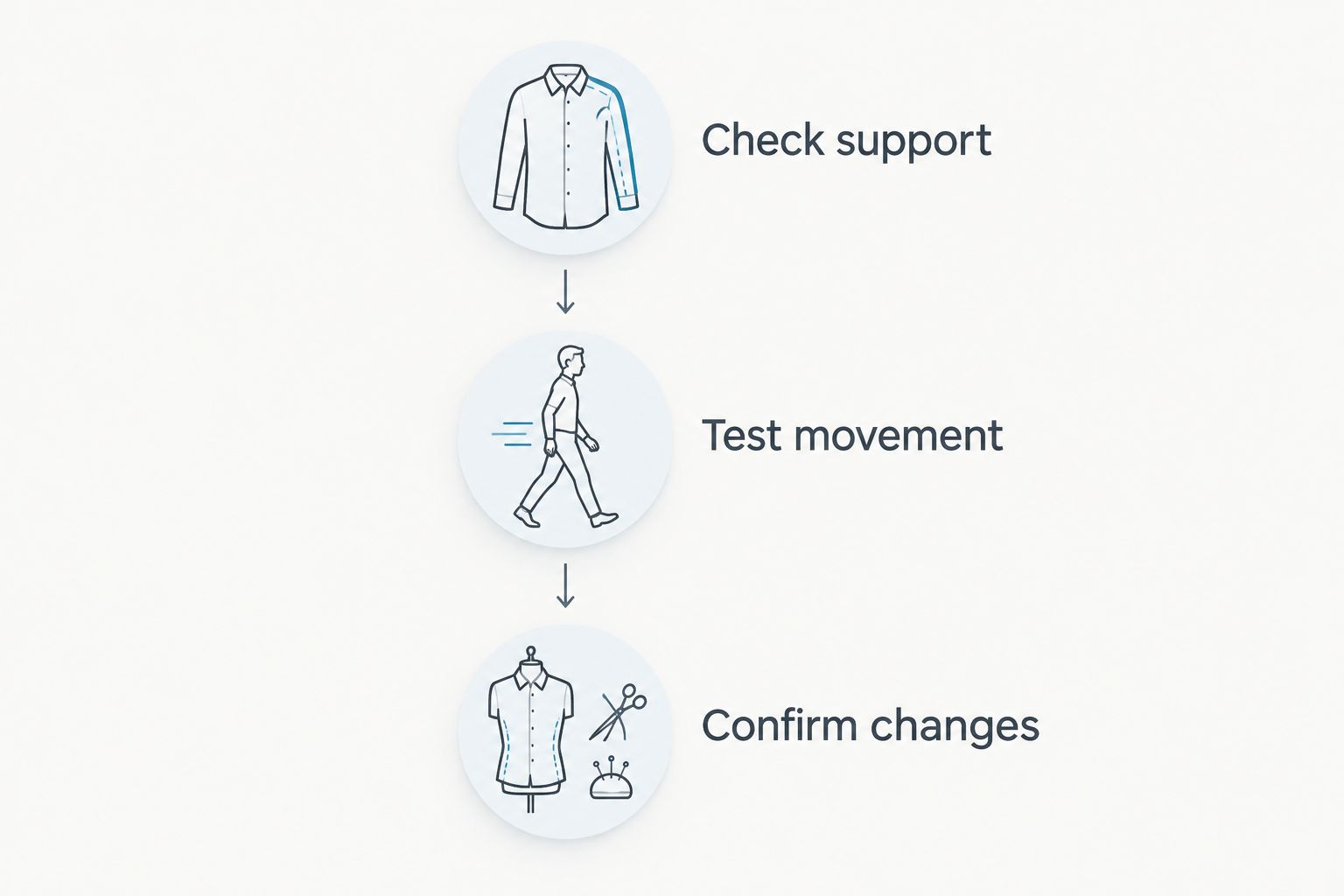
Check support
Stand naturally without holding the bodice in place. Ask whether the neckline and internal support work as intended, and explain if you feel pressure, slipping or discomfort.
Do not assume tighter means better supported. Ask the fitter to explain the difference between a secure fit and a restriction that needs attention.
Test movement
Sit fully, walk at your normal pace and lift your arms as you would when greeting someone. Try turning and taking a step onto a suitable raised surface if the boutique permits it.
Notice whether you repeatedly adjust the neckline or hold the skirt out of the way. Those observations give the fitter concrete problems to assess.
Confirm changes
Separate changes needed for fit from changes you simply prefer aesthetically. Ask which are allowed on the rental and how the final result will be checked.
Request a clear explanation of anything that cannot be changed. You can then decide whether the dress remains right for you without relying on an assumed alteration outcome.
Which bridal styles should you try?
Your preferred style is a valid starting point, whatever your size. An A-line shape is not compulsory, and a fitted gown is not something you need to earn through weight loss.
Bring references that show what appeals to you: a defined waist, a clean neckline, visible texture or a dramatic skirt. Then explain what you want to feel—supported, unrestricted, covered or able to dance without repeated adjustments.
Keep enduring preferences separate from details you enjoy right now. For your 2026 wedding, you can choose a current look because you love it; you do not need to label every choice timeless. Equally, you do not have to add a fashionable detail to make a simple dress feel personal.
Ask to see the back and side views as well as the front. If photography is permitted, use pictures to remember your preferences, not to pick apart your body. The deciding question is whether you recognise yourself in the dress and feel comfortable wearing it.
Avoid treating sleeves, a higher neckline or a fuller skirt as automatic fixes. Each changes the fitting questions, so assess the specific garment rather than relying on a silhouette rule.
What should overseas brides confirm before renting?
An overseas enquiry needs a fitting plan and a rental-use agreement, not just a beautiful photograph. Establish whether the boutique permits the proposed destination and how collection, transport and return would work.
Carte Blanche offers worldwide shipping, but that fact does not establish international rental terms, delivery timing or permission to alter a rented gown abroad. Ask about your intended transaction specifically.
Before booking travel or committing to a dress, confirm:
- Whether an in-person fitting is required and how appointments are arranged.
- Which measurements and photographs the boutique needs for an initial assessment.
- Whether your proposed wedding location and travel plans are permitted under the rental agreement.
- Who is authorised to make alterations and how any changes are approved.
- How transport, care, collection and return responsibilities are assigned.
- What happens under the agreement if the assessed fit does not meet your needs.
For international planning in 2026, keep the wedding date distinct from travel, fitting and return dates. Ask the boutique to assess the full sequence rather than assuming the ceremony date is enough information.
Do I need to know my bridal size before enquiring?
No—you can begin with your measurements and the styles you like. Your usual clothing size is useful context, but it should not replace the designer’s chart or assessment of the actual garment.
Ask the boutique to explain its sizing terminology so you are comparing like with like.
Can a rental gown be let out to fit me?
Only a garment assessment and the rental agreement can answer that question. Ask about construction and permission together; do not assume visible seams mean a dress can be enlarged sufficiently.
If substantial changes are necessary, compare another dress or a purchase route before committing.
Should I change my body to fit a rental dress?
No—choose a dress around your body rather than making a rental conditional on weight loss. Give the boutique accurate measurements and ask how any later measurement changes would be handled under its fitting arrangements.
You deserve a workable plan for the person wearing the dress, not an expectation to become a different size.
FAQ
Can plus-size brides rent designer wedding gowns in Singapore?
Yes, provided a boutique confirms a suitable dress and permits the changes needed for fit. Ask about the exact garment’s measurements, fitting process and rental terms before reserving.
Does Carte Blanche offer plus-size designer gown rentals?
Carte Blanche offers designer wedding gown rental and purchase; confirm suitability for your measurements directly with the boutique. A general rental offering does not establish the fit of a particular gown.
What measurements should I send a bridal boutique?
Start with bust, waist and hip measurements taken according to the designer’s instructions. Ask whether the intended gown also requires height, upper-arm or torso measurements.
Is buying a designer sample gown better than renting?
Buying is better suited to brides who want ownership or changes a rental agreement does not permit. Renting remains a valid choice when the dress fits and its use and return terms suit your plans.
Can I alter a rented wedding gown?
Only make alterations the boutique explicitly permits. Confirm the authorised person, allowed changes and any requirement to reverse them before agreeing to the rental.
Can overseas brides have a wedding gown shipped internationally?
Carte Blanche offers worldwide shipping. Confirm whether shipping applies to your intended rental or purchase, and establish the relevant fitting, transport and transaction terms before committing.
Do plus-size brides have to choose an A-line wedding dress?
No—plus-size brides do not have to choose an A-line silhouette. Start with your preferred look and assess the actual gown’s fit, support and freedom of movement.
One last thing
Ask to spend part of the fitting sitting down. Your wedding includes conversations, meals and quiet moments as well as standing photographs, so a dress that only feels good upright has not passed the whole test.
Choose the gown you can enjoy your wedding in. A reassuring appointment leaves you with clear answers about fit and responsibilities, not pressure to overlook discomfort.