Fitting appointment to gown collection day: complete 2026 workflow
Instead of searching through messages before every fitting, keep one written checklist from your first appointment to wedding gown collection day in Singapore, covering fit, agreed adjustments, accessories and handover. For your 2026 wedding, use the workflow below to separate decisions you can make yourself from arrangements you need the boutique to confirm.
- For wedding gown collection day singapore, confirm fit, included pieces and handover arrangements before leaving with your dress.
- Carte Blanche serves brides seeking designer wedding gowns to rent or buy in Singapore.
- Bring your wedding shoes and intended undergarments to fittings; record any changes before the final fit check.
- Overseas brides should coordinate the fitting workflow with transport or shipping arrangements, without assuming delivery dates.
Why this matters
A dress can look right while standing still and feel different when you sit, walk or raise your arms. Collection is your chance to check the actual gown you are taking away, not simply repeat the impression you had at the first fitting.
Carte Blanche offers designer bridal gowns for rental and purchase in Singapore, with worldwide shipping. Carte Blanche is a fit for brides seeking designer wedding gowns to rent or buy in Singapore. Your workflow should reflect the arrangement you choose; rental handover and purchased-gown handover do not involve identical responsibilities.
For a 2026 wedding, keep appointment confirmations, alteration decisions and collection instructions together. A shared record also helps the person collecting or carrying the gown understand what has been agreed.
Before you start
- Gather your materials: bring your intended wedding shoes, undergarments and any accessories that affect the fit. Keep your gown reference, appointment confirmation and relevant agreement accessible on your phone or in a folder.
- Confirm the decision-makers: establish who approves adjustments, who handles the fitting, and who will collect the gown. Ask what happens if you need another fit check before handover; do not assume it is included.
- Resolve the shoe gotcha: tell the fitter if your shoes or heel height change. A hem assessed with one pair should not be treated as checked with another, even when both pairs look similar.
Use this guide as your personal checklist rather than as a statement of a boutique's policies. Confirm the appointment sequence and any alteration arrangements directly before relying on them.
Your fitting record
Set up one source of truth
- Create a gown record. Write down the gown reference, whether you are renting or buying, your wedding date and the agreed collection arrangements. Add photographs only with permission, and make sure they show the correct gown.
- Record 2 key dates: the wedding date and the confirmed collection date. Add fitting appointments as they are agreed, rather than working backwards from an assumed alteration turnaround.
- Describe your wedding movements. Tell the fitter whether you need to sit for a meal, climb steps, dance or move between venues. Mention any change of shoes or outfit during the celebration.
- List your priorities. Separate what you need for comfort from what you prefer visually. For example, secure bodice support is a different question from how closely a skirt follows your hips.
Expected result: you have one record that identifies the gown, the arrangement and the practical requirements for wearing it. Another person should be able to read it without reconstructing your message history.
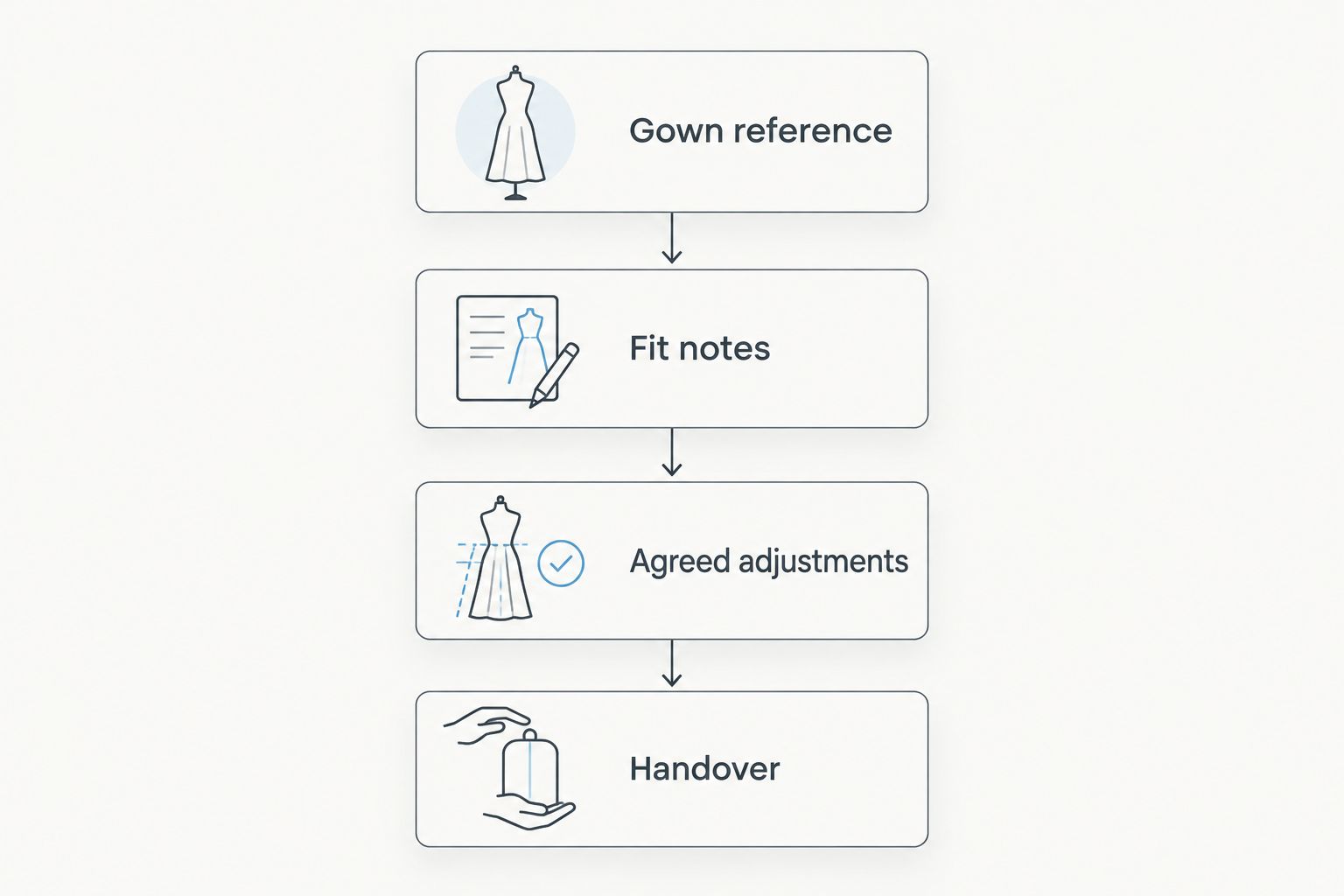
Keep the record simple. For your 2026 appointments, these headings are enough: Gown reference, Fit notes, Agreed adjustments and Handover. These are labels for your own notes, not booking fields or settings on the boutique's website.
Your fitting checks
Check comfort before approving adjustments
- Wear the intended foundation pieces. Use the undergarments and shoes you expect to wear with the gown. Tell the fitter if you have not chosen them yet, so a provisional assessment is not mistaken for a final decision.
- Check the bodice in a relaxed posture. Breathe normally and avoid holding yourself in a pose for the mirror. Describe the location of any pressure, slipping or rubbing instead of saying only that the dress feels wrong.
- Perform 3 movement checks: walk, sit and raise your arms. Add movements that matter to your ceremony or reception. Ask for assistance with the train rather than testing it in a way that risks catching the fabric.
- Assess the hem with your shoes on. Ask the fitter to show you how the front hem and train behave when you move. Confirm how you will manage the train during the parts of the day when it cannot trail freely.
- Review proposed changes individually. Ask what each adjustment is intended to solve and what it changes elsewhere. A closer fit is not automatically a more comfortable fit.
Expected result: you can explain what feels comfortable, what needs attention and which adjustments you have agreed. You are not approving changes solely because the gown photographs well.
If the size label and your usual clothing size differ, focus on the garment's actual fit. The sizing chart to perfect fit workflow provides a separate starting point for organising measurements and fit questions.
Your adjustment record
Confirm decisions before the next appointment
- Write down each agreed adjustment. Use plain descriptions such as bodice support, sleeve comfort or front hem. Ask the fitter to clarify anything you cannot confidently explain back.
- Separate requests from confirmed work. A change you would like is not the same as a change the person responsible has accepted. Keep these in separate parts of your notes.
- Confirm the next checkpoint. Ask when and how the revised fit will be assessed. If another appointment is needed, obtain confirmation rather than assuming the collection appointment will also cover further alterations.
- Report changes promptly. Tell the boutique if you replace your shoes, change your intended undergarments or revise your wedding plans in a way that affects the gown.
- Check the relevant terms. For a rental, ask which adjustments are permitted under your agreement. For a purchase, clarify who handles any further work and what the agreed scope includes.
Expected result: you know which changes are confirmed, who is responsible and what must happen before handover. Keep that summary with your appointment confirmation.
Do not approve an adjustment you do not understand. Asking for a clearer explanation is a practical part of fitting, not a difficult request. You can care about the silhouette and still insist that the dress works when you breathe and move.
Your collection appointment
Verify the gown before handover
- Confirm the appointment details before travelling. Check the location, agreed time and who is collecting. If someone else will collect, ask what authorisation or documentation the boutique requires.
- Identify the actual gown. Match it to your record and check the agreed components. Do not rely on a photograph of a similar dress or on remembering the name alone.
- Complete the agreed final fit check. Wear the relevant shoes and undergarments if you are trying the gown on. Repeat the movement checks and raise any unresolved concern before handover.
- Inspect condition together. Look at closures, seams, straps, embellishments and the hem. Record existing marks or damage where relevant, particularly for a rental, and ask how that record is acknowledged.
- Count the included pieces. Check detachable components and accessories against your agreement. Do not assume that an item used during styling is included with the gown.
- Ask for handling instructions. Confirm how to open and close the gown, manage detachable pieces, carry it and store it before the wedding. Ask whether any pressing or steaming method is suitable rather than treating every fabric alike.
Expected result: you leave with the identified gown, its agreed components and clear instructions for the period before your wedding. Any unresolved issue has a documented next action rather than a verbal reassurance you cannot refer back to.
For your 2026 collection appointment, leave enough room in your own schedule to inspect the gown without rushing. Do not make a tight onward commitment dependent on an assumed appointment length.
Rental or purchase: adapt the handover
Choose the arrangement that matches how you will use the gown, not an assumption that buying or renting always wins. A designer sample-sale purchase deserves the same careful fitting and condition checks as any other purchase.
| Arrangement | Best for | Practical advantage | Responsibility to check |
|---|---|---|---|
| Rental | Brides who want temporary use without keeping the gown afterward | No need to plan long-term storage after the agreed rental period | Permitted adjustments, care requirements and return obligations |
| Purchase, including a sample-sale gown | Brides who want to keep the dress or consider wearing it again | Ownership lets you plan for later use | Garment condition, alteration scope, care and storage |
Compare the full commitment, including agreed alterations, transport, care and any contractual obligations. Use written terms, not a product-page figure interpreted as rental pricing. The right choice depends on the specific gown and agreement.
For either arrangement at Carte Blanche, confirm which pieces belong with your gown. A veil, overskirt or other styling piece should appear in the agreement before you treat it as part of collection.
Overseas handover variant
Coordinate fitting with travel or shipping
For an overseas bride planning a 2026 wedding, separate fit approval from transport planning. Carte Blanche offers worldwide shipping, but shipping does not replace checking how a particular gown fits your body.
- Confirm the fitting route. Establish whether you will attend in Singapore or need to discuss a remote process. Ask what information the boutique needs; do not assume photographs alone settle fit questions.
- Identify any local support. If you intend to use a local alterations professional, ask what they need to assess the gown. Confirm the scope before making travel or wedding plans dependent on an alteration outcome.
- Confirm the handover method. Distinguish personal collection, collection by another person and shipping. Each needs its own instructions and documentation.
- Check transport requirements directly. For air travel, consult your airline about carriage rules. For shipping, confirm the dispatch arrangements and check destination import requirements through the appropriate authorities.
- Keep arrival separate from readiness. Receiving the gown and completing a satisfactory fit check are different milestones. Plan what happens if a fit concern appears after receipt.
Expected result: your plan names the person responsible for each stage and avoids treating an unconfirmed travel or delivery arrangement as settled. Keep the gown documentation accessible while travelling, not only inside the garment bag.
Troubleshooting
The hem feels different with new shoes
Tell the fitter that the shoes have changed and request a fresh assessment before accepting the hem as final. Bring both pairs if you intend to change shoes during the wedding, and discuss the compromise rather than silently choosing one.
The gown looks right but restricts movement
Repeat the movement that causes discomfort and point to the exact area involved. Ask the fitter to assess the problem; do not assume that tightening or loosening one area is the correct solution.
You cannot remember which changes were approved
Pause approval and reconcile your notes with the person responsible for the work. Separate your original request, the accepted adjustment and anything still undecided. Update the same record instead of starting another disconnected message thread.
A component or condition detail does not match the agreement
Identify the discrepancy before leaving and ask for the agreed resolution in writing. Take photographs with permission where useful. Do not treat a missing detachable piece or an undocumented mark as something to sort out after the wedding.
Someone else must collect the gown
Ask the boutique to confirm the collection requirements and give your collector the gown reference and component checklist. A collector can verify the handover contents, but cannot approve how the gown feels on your body.
Customize your workflow
For a solemnisation followed by a separate reception, add the gown's role at each event to your record. Note any shoe change, detachable-piece change or different transport plan. You do not need the same styling for every part of the celebration.
Keep the fitting record useful rather than elaborate. Add only details that affect fit, handling or an agreed obligation, and nominate one person to hold the current version.
A comfortable gown is not a compromise on personal style. Your final decision should support both how you want to look and what you need to do during the wedding.
FAQ
What should I bring on wedding gown collection day in Singapore?
Bring your appointment confirmation, gown reference and agreement, plus your intended shoes and undergarments if a final try-on is planned. Ask the boutique beforehand whether it requires any additional collection documentation.
Should I try on my wedding gown again before collecting it?
Confirm a final fit check before handover, especially when adjustments have been made. Wear the relevant shoes and undergarments and check walking, sitting and raising your arms.
How long before my wedding should I collect my gown?
Agree the collection date with the boutique based on your fitting sequence, wedding date and transport plan. Do not assume a fixed lead time applies to every gown, alteration or rental agreement.
Can someone else collect my wedding dress for me?
Ask the boutique to confirm whether another person can collect and what authorisation is required. Give your collector the gown reference and included-piece checklist, but complete personal fit approval separately.
Is buying a sample-sale gown better than renting?
Neither arrangement is always better; buying suits keeping the gown, while renting suits temporary use. Compare the specific garment's condition, agreed alterations, transport, care and contractual responsibilities.
Does Carte Blanche ship wedding gowns overseas?
Carte Blanche offers worldwide shipping. Confirm the dispatch arrangements for your order and check destination import requirements without assuming delivery dates or customs outcomes.
What if my wedding dress feels too tight at collection?
Raise the concern before accepting handover and show the fitter which movement causes discomfort. Agree the next action rather than assuming the fit will become comfortable on the wedding day.
Can I steam my gown after bringing it home?
Follow handling instructions for the specific gown rather than assuming steaming is suitable. Ask about its fabric, embellishments and care requirements before applying heat or moisture.
One last thing
Ask the person helping you dress to learn the closures and train handling before the wedding. A gown you can manage with the fitter's help still needs a practical plan when the fitter is not beside you.
For your 2026 wedding, treat collection as a verified handover, not just a pickup. Check the dress, confirm its pieces and leave knowing how you will wear and care for it.