Can plus-size brides find their size in sample sale gowns?
Yes—plus-size brides can find sample sale gowns that fit, but the decision must rest on the individual dress’s measurements, construction and condition, not its size label alone. When shopping for plus size sample sale wedding gowns in 2026, confirm the fit and any alteration work before committing; a beautiful sample is not a good choice if it depends on an unverified promise to make it larger.
- Plus size sample sale wedding gowns need individual measurement checks; a designer name does not establish fit.
- Compare the actual sample with your measurements, then ask a bridal alterations specialist to assess proposed changes.
- Carte Blanche offers designer wedding gowns and worldwide shipping; confirm the specific sample’s measurements before deciding.
- Buying suits ownership and repeat wear; renting suits brides who prefer not to keep the gown.
Why this matters
You deserve to shop for a dress that fits your body, rather than shop for a body that fits a dress. Sample shopping works best when you separate the style you love from the technical question of whether that particular garment works for you.
For a broader starting point, explore the guide to plus-size wedding gowns in Singapore. Here, the focus is narrower: how to assess an individual sample without relying on a familiar dress size or assuming alterations can solve everything.
Can plus-size brides find their size in sample sale gowns?
Yes. A sample is an individual garment, and its suitability depends on how its dimensions and structure relate to your body. The useful question is not simply whether a boutique carries your usual size, but whether the exact dress you are considering gives you a workable fit.
Use this sequence before making a decision:
- Record your measurements. Start with 3 core measurements: bust, waist and hips. Ask which additional measurements the dress requires, including length, torso or upper-arm measurements where relevant.
- Identify the exact sample. Request its label size, measurement information, condition and details of any previous alterations. Do not substitute measurements from another dress by the same designer.
- Check the construction. Ask about the lining, fastening, internal support, sleeves and seam allowances. These details determine what an alterations specialist needs to assess.
- Confirm the proposed work. Have the actual garment assessed before accepting a plan to change its size or structure.
- Decide on the complete purchase. Consider fit, alteration requirements, condition, transport and the terms attached to the sale—not just how the dress looks in a photograph.
Buy the sample for the fit it can demonstrably achieve, not the fit you hope it will achieve.
Why sample-gown fit varies
Size labels are useful reference points, but they do not describe every part of a gown. These factors explain why dresses with a similar label can require different decisions:
- Designer sizing: Compare your measurements with the relevant designer’s chart rather than translating directly from your everyday clothing size.
- Previous alterations: Ask whether the sample has been shortened, taken in or otherwise changed; the label does not record those changes.
- Silhouette: A fitted skirt requires attention through the hips, while a fuller skirt changes where the close-fitting areas sit.
- Fabric and lining: Assess the whole garment. A flexible outer layer does not establish that the lining or internal bodice has the same flexibility.
- Internal structure: Cups, boning and waist supports affect how the dress sits and which changes require specialist work.
- Length and proportions: A gown can fit around the body yet need a separate assessment of its waist position, straps, sleeves or hem.
For your 2026 shortlist, keep a separate fit record for each sample. A reassuring answer about one gown does not transfer automatically to another.
Which bridal silhouette should you try?
There is no silhouette that every plus-size bride should wear. Start with the shape you enjoy, then assess support, movement and the exact sample’s dimensions.
The table below compares styling directions, not particular gowns or size ranges. Each has a practical benefit and a fitting question worth resolving.
| Styling direction | Best for | Practical benefit | Limitation to check |
|---|---|---|---|
| A-line | Brides who want a defined bodice and a skirt that widens below | Separates the fitted upper body from a fuller skirt | A generous skirt does not resolve a tight bodice |
| Ball gown | Brides who enjoy a full skirt and a pronounced waist | Creates a distinct contrast between bodice and skirt | Test skirt volume, weight and ease of sitting |
| Fit-and-flare or mermaid | Brides who want a closer fit through the body | Makes the fitted outline part of the design | Check hips, thighs, stride and seated comfort |
| Straight or softly draped | Brides who prefer a less structured outline | Keeps attention on fabric, drape and personal styling | Check whether the lining restricts movement or changes the drape |
Do not treat these labels as rules about which parts of your body to hide. Your preference matters: a close-fitting gown is a valid choice, and so is a full skirt.
If you love a current look, identify the detail you actually want—perhaps a neckline, sleeve or draped waist. That makes it easier to balance a trend-led detail with the overall bridal style you want to remember.
How do you check whether the sample really fits?
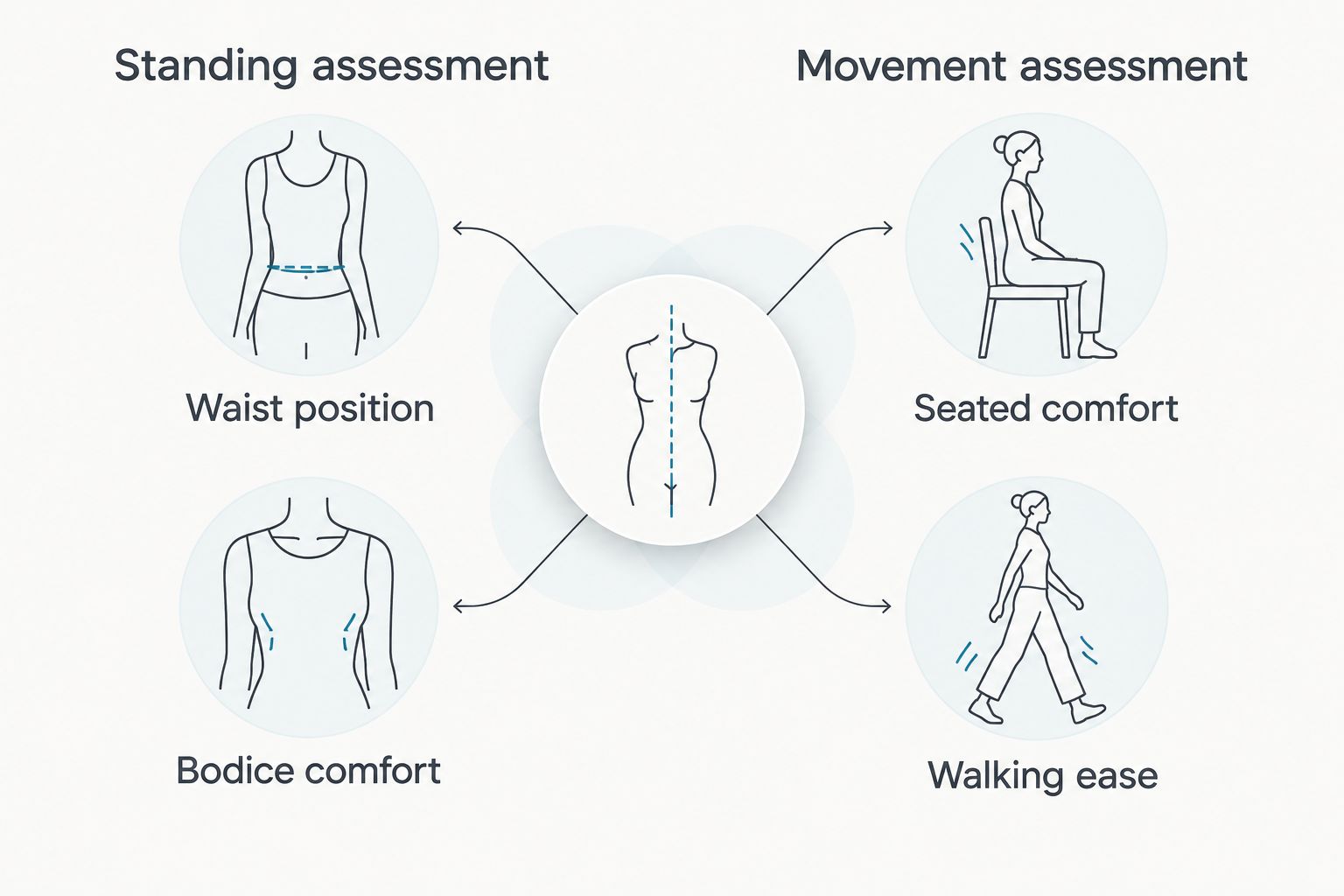
A dress that closes is not automatically comfortable. Use 2 fit checks: a standing assessment and a movement assessment, wearing the undergarments and shoes you intend to use where practical.
Standing assessment
Check where the waist sits, whether the neckline stays where you want it, and how the bodice feels when you breathe normally. Look at the lining as well as the visible fabric.
Ask whether cups and internal supports sit in the intended position. If something feels wrong, describe the sensation clearly: pressure at the ribs, pulling across the hips or straps digging into your shoulders is more useful feedback than simply saying the dress feels small.
Movement assessment
Sit down, walk, turn and lift your arms through the movements your celebration requires. Include stairs or a comparable step if your wedding plans involve them, and practise the kind of embrace you expect to give your partner.
Check whether the dress stays in place without repeated adjustment. If you plan to change shoes during the celebration, discuss how that affects the hem rather than assuming the same length will work equally well.
Take notes immediately after trying the dress. Photographs help you remember the outline, but your notes preserve how it felt to sit, breathe and move—details a still image cannot capture.
Can a sample wedding dress be made bigger?
Some sample wedding dresses can be enlarged, but the answer depends on the actual garment and the proposed change. Seam allowance, fabric, lining, embellishment and internal construction all need inspection; there is no reliable universal size increase to promise.
Ask the alterations specialist to explain exactly what they would change. Letting out a seam, replacing a panel and changing a fastening are different interventions, with different effects on the finished design.
Before proceeding, establish:
- Which areas need more room and whether suitable material exists there.
- Whether the lining and internal structure need changes too.
- Whether the work changes the neckline, back, waist position or overall appearance.
- Whether matching fabric or decorative details are needed.
- What happens if the proposed result cannot be achieved.
Do not buy a too-small sample on a general assurance that wedding dresses can be altered. Equally, do not assume that a much larger dress is a straightforward solution: ask how reducing it would affect proportion and detail.
When does buying a sample make more sense than renting?
Buying a sample makes sense when the individual dress fits your needs, the alteration plan is acceptable and you want to own it. Renting makes sense when you prefer temporary use and can work within the agreed alteration, wear and return terms.
Neither route wins automatically. For a 2026 wedding, compare the complete obligations in writing rather than assuming that either buying or renting represents better value.
| Route | Best for | Main benefit | Main responsibility or limitation |
|---|---|---|---|
| Buy a sample | Brides who want ownership or repeat wear | You keep the gown after the wedding | Assess condition, alteration work, care and storage |
| Rent a gown | Brides who prefer temporary use | You do not need to keep the gown afterwards | Confirm permitted changes, use conditions and return requirements |
For a fair total-cost comparison, request itemised information for the gown, alterations, cleaning, transport and any applicable charges. For an overseas purchase, ask how destination taxes and duties should be checked; do not assume that shipping arrangements settle those obligations.
Repeat wear can be a personal reason to buy, whether for portraits, another celebration or simply keeping the dress. It is not a reason to accept an uncertain fit. For a fuller decision framework, read when a sample-sale wedding gown beats renting.
How should overseas brides assess a sample remotely?
An overseas enquiry should focus on the individual garment, not just the designer photograph. Request clear views of the front, back, fastening, lining and any areas that need repair or alteration.
Ask how the measurements were taken and whether they describe the garment or the intended wearer. Do not compare a flat garment measurement directly with a body circumference without clarifying the method and intended fit.
Carte Blanche is best for brides seeking designer wedding gowns with worldwide shipping. That service is relevant to overseas shoppers, but it does not replace a sample-specific fit assessment or establish a particular dress’s suitability.
For your 2026 enquiry, prepare 1 written summary containing your measurements, wedding date, destination, preferred style and comfort priorities. Add any requirements for sleeves, coverage, seated comfort or undergarment compatibility that matter to you.
Before committing, ask Carte Blanche to confirm the exact sample’s measurement information, condition and applicable purchase terms. Arrange an independent local alteration assessment where needed, and establish the shipping arrangements without assuming a delivery date, customs outcome or return entitlement.
What should you ask before saying yes?
A useful enquiry is specific and leaves room for an honest answer. Ask which sample matches your measurements most closely, what changes it needs, and whether the proposed work has been assessed on that garment.
Then separate preference from feasibility. You can love the neckline and still decide the bodice is not right; you can also reject a technically workable dress because it does not feel like you.
Before paying, keep the measurement record, condition information, alteration advice and agreed terms together. If you still need an answer about a critical fit issue, pause the purchase rather than turning that uncertainty into a wedding-week task.
FAQ
Can plus-size brides buy sample sale wedding gowns?
Yes—plus-size brides can buy sample sale wedding gowns when the individual garment fits or has an assessed alteration plan. Check the actual sample’s dimensions, construction and condition rather than relying on its label size.
Should I order my normal clothing size in a bridal sample?
No—do not use your everyday clothing size as the deciding measurement for a bridal sample. Compare your body measurements with the relevant designer information and clarify any previous alterations to the garment.
Can a seamstress let out a sample wedding dress?
A bridal alterations specialist must inspect the dress before confirming whether it can be let out. Seam allowances, lining, structure and decorative details determine what work is possible.
Are A-line wedding dresses the best choice for every plus-size bride?
No—A-line wedding dresses are not the best choice for every plus-size bride. Choose the outline you enjoy, then assess the particular gown’s support, proportions and comfort.
Is buying a sample gown better than renting?
Buying a sample gown is better when ownership and the particular dress suit your plans; renting is better when you prefer temporary use and accept the agreed terms. Compare the complete obligations and alteration requirements before choosing.
How can I check a sample gown’s fit from overseas?
Request sample-specific measurements, construction details, condition photographs and an assessment of any proposed alterations. Clarify the measurement method and purchase terms before committing remotely.
Does Carte Blanche ship wedding gowns internationally?
Carte Blanche offers worldwide shipping for its designer wedding gowns. Confirm the arrangements for your specific order separately from questions about fit, alterations and purchase terms.
One last thing
Before saying yes to a sample for your 2026 wedding, try the ordinary movement you are most likely to forget: sitting comfortably through a conversation. A dress deserves more than a standing mirror test.
You do not need to justify wanting a fitted silhouette, more coverage, a dramatic skirt or a simpler dress. The right sample supports your choices without making your comfort depend on changing your body.