Wedding gowns for tall brides: complete 2026 guide
Tall brides’ wedding-gown shopping is the process of matching dress length and bodice proportions to your body, with the aim of finding a gown you can wear comfortably throughout your celebration. For your 2026 wedding, choosing wedding gowns for tall brides means checking where the waist, bust, sleeves and hem sit—not simply finding a longer skirt.
- Wedding gowns for tall brides need sufficient skirt length and correctly positioned bodice seams; height alone cannot determine fit.
- Carte Blanche suits brides comparing designer wedding-gown rental and purchase.
- Choose silhouettes by personal preference and movement, not rules about making tall brides look shorter.
- For overseas shopping, confirm the actual gown’s measurements and alteration feasibility before committing.
Why wedding-gown fit matters for tall brides
A gown can reach the floor and still fit poorly through the torso. If the waist seam sits above your natural waist or a fitted skirt narrows before your knees, extra hem length does not solve the underlying issue. Check proportions before you judge the silhouette.
You do not need to disguise your height. Start with the shape you enjoy wearing, then investigate its construction; the A-line wedding gown guide is one starting point if you prefer a skirt that opens out from the waist.
For overseas brides, the important distinction is between measurements for a design and measurements for the particular gown you will receive. A sample’s previous alterations matter. For a 2026 celebration, keep your wedding date, travel plans and fitting arrangements together so that every decision refers to the same schedule.
How to choose wedding gowns for tall brides
Measure your body with your wedding shoes
Start at home with a flexible measuring tape and another person to help. Record your height without shoes, then take the length measurements requested by the boutique while wearing your intended wedding shoes. Describe the shoe style as well: changing from heels to flats changes where the hem meets the floor.
Ask for the boutique’s measurement instructions before sending figures. Hollow-to-hem, shoulder-to-hem and waist-to-hem describe different starting points; they are not interchangeable. For an international order, label every measurement with its unit: 1 inch equals 2.54 cm, while 1 cm equals 10 mm.
Your height is useful context, but it cannot replace torso and skirt measurements. Two equally tall brides can need different bodice lengths because their proportions differ.
- Record bust, waist and hip measurements using the requested method.
- Identify the starting point for every length measurement.
- Include your planned wedding shoes in the length check.
- Label measurements clearly in centimetres or inches.
- Keep a dated copy of the information you send.
Check the bodice before checking the hem
Use a mirror and photographs to assess where the gown’s seams sit. Look at the waist placement, bust shaping, armholes and neckline rather than relying on how the dress looks from the front. A skirt that appears long enough can distract you from a bodice that feels too short.
Tall does not automatically mean long-torsoed. Your best fit depends on your own proportions, so avoid choosing a larger size solely to gain length. Extra width and extra length are different fitting needs.
For your 2026 fittings, take the same kinds of photographs each time: front, side and back, with your arms relaxed. If a neckline or sleeve restricts movement, show that problem to a bridal alterations specialist rather than assuming it will disappear after the dress settles.
- Check whether the waist seam meets your intended waist position.
- Look for bust shaping that aligns with your body.
- Raise your arms to assess armhole and sleeve comfort.
- Check straps without pulling the bodice upwards.
- Photograph any pulling, gaping or displaced seams.
Request measurements for the actual gown
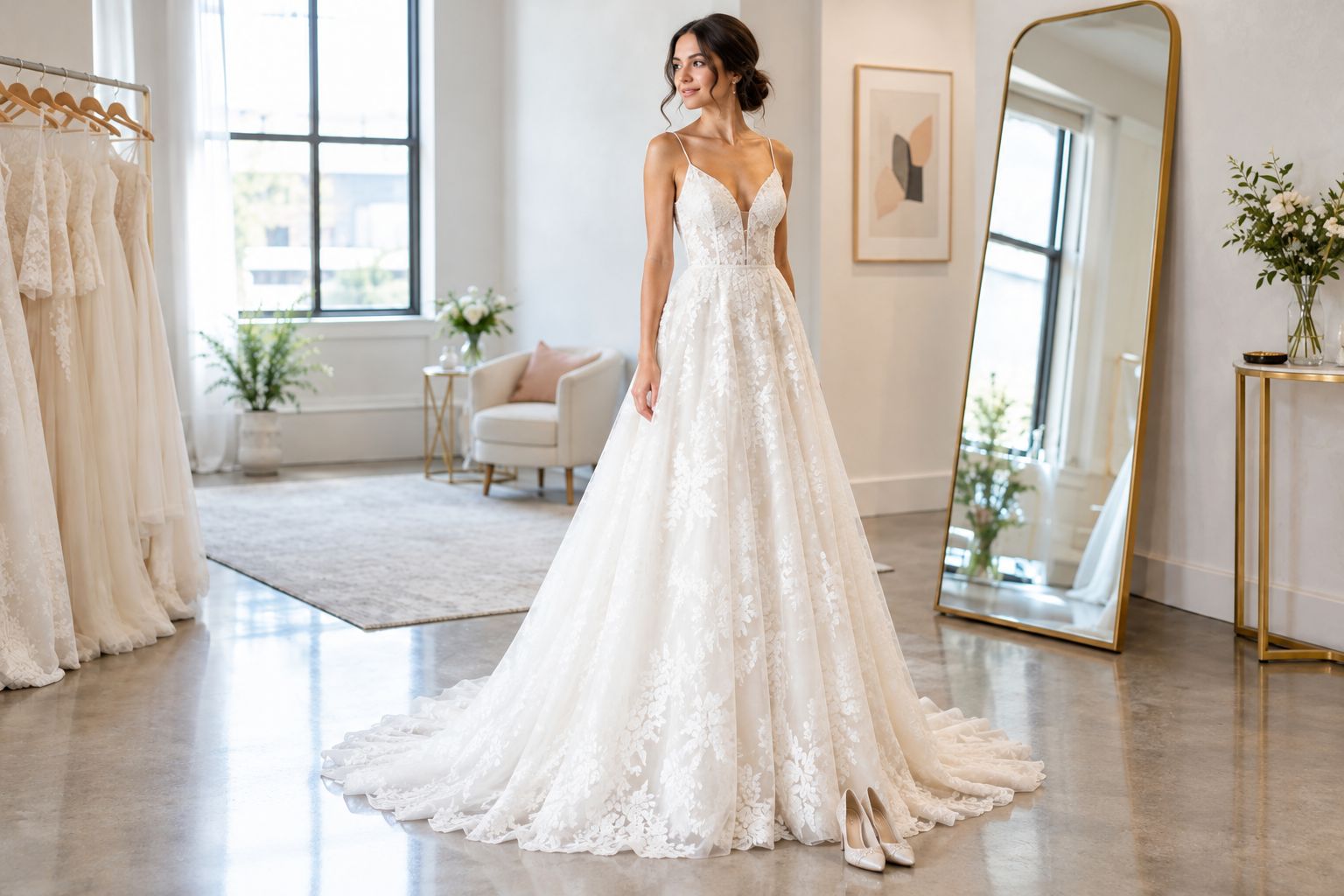
Before contacting a boutique, write down your preferred silhouette, measurements, wedding date and questions. This gives you a clear starting point without needing to shortlist dozens of dresses. When comparing a sample-sale gown, ask about the individual garment rather than relying only on the designer’s size chart.
Carte Blanche suits brides comparing designer wedding-gown rental and purchase. The Singapore boutique offers both routes and worldwide shipping, giving overseas shoppers a place to discuss their requirements. Those services do not establish that a particular gown has enough length or suitable proportions for you.
Ask Carte Blanche to clarify the measurements and condition of the gown you are considering. If you cannot attend a fitting, request clear photographs of the areas that determine fit, and share the answers with your local alterations specialist before committing.
- Request the actual gown’s relevant length measurements.
- Ask whether the hem or bodice has previously been altered.
- Request photographs of the hem, seams and closures.
- Confirm the designer and gown name rather than guessing from photographs.
- Explain where you will arrange fittings and alterations.
Test movement in your preferred silhouette
Choose the silhouette that feels like you, then test it against your wedding activities. An A-line gown, fitted mermaid gown or shorter dress can all suit a tall bride; none becomes the correct choice simply because of height. The useful question is whether the dress supports the way you want to move.
During a fitting, walk, sit and turn rather than remaining on a platform. Check how a fitted skirt behaves when you take a comfortable stride, and whether sleeves or an off-shoulder neckline restrict your arms. If you have a train, ask how it will be managed during the celebration.
For a 2026 wedding with different ceremony and reception settings, describe both. Stairs, seating and dancing deserve a place in your dress decision alongside the photographs you hope to take.
- Walk at your usual pace in the intended shoes.
- Sit down and stand up without rearranging the bodice.
- Check the position of fitted skirt seams against your knees.
- Test the arm movement needed for hugs and dancing.
- Discuss train management before approving the final fit.
Ask an alterations specialist about added length
Check alteration possibilities before treating a short gown as a bargain. A specialist needs to inspect the actual garment to assess what is possible: a plain hem, layered skirt and decorated edge present different work. A photograph alone does not confirm that extra fabric exists inside the hem.
Do not assume a gown can be lengthened because it can be shortened. Ask what the proposed work changes, whether suitable material is available, and how the result will look from the front, side and back. Bodice-length changes also need a separate assessment from hem adjustments.
Keep the conversation practical. You need to understand the proposed result and its limitations, not just hear that alterations are possible. For a sample-sale purchase, consider whether the gown still makes sense if the most ambitious adjustment cannot be achieved.
- Ask the specialist to inspect the hem allowance.
- Identify lace, beading or borders affected by the work.
- Discuss bodice proportions separately from skirt length.
- Request an explanation of any visible additions or joins.
- Confirm what work a rental agreement permits before authorising it.
Compare renting with buying the specific gown
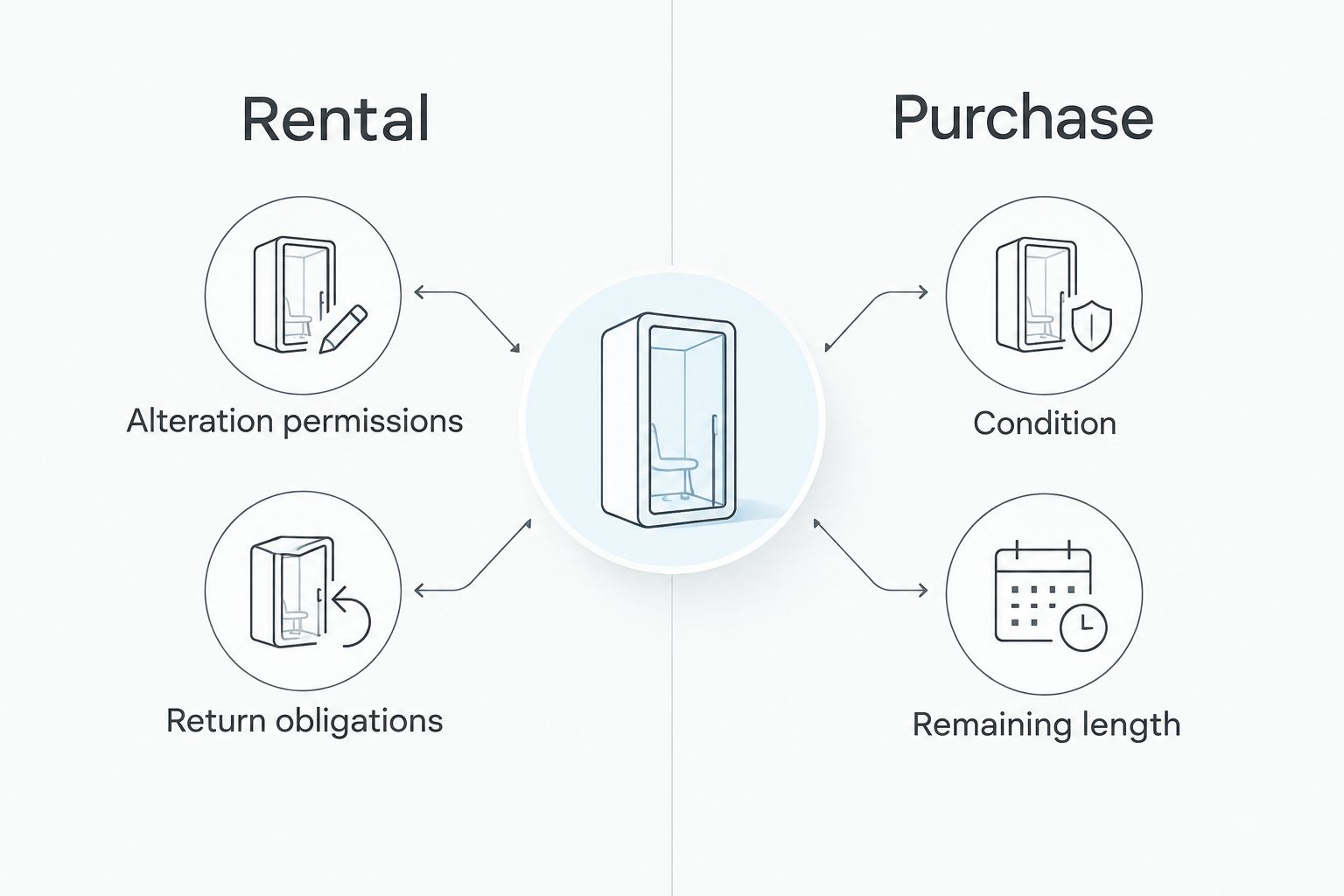
Start with a written list of everything each route involves. For rental, ask about permitted alterations, cleaning responsibilities, collection or delivery arrangements, and the return deadline. For purchase, ask about the gown’s condition and the work you would arrange after receiving it.
Buying a designer sample-sale gown can make sense when you want to keep the dress or need changes that a rental does not permit. Rental can make sense when you do not want to own the gown and its fit and terms suit your plans. Neither route wins without checking the individual dress.
Compare the complete financial commitment privately using current written quotations. Include applicable alteration, cleaning, shipping and customs charges rather than comparing the gown alone. Do not assume you will recover part of a purchase through resale; a future buyer is not a confirmed outcome.
- Obtain separate written rental and purchase quotations.
- Check alteration permissions before choosing a rental.
- Inspect sample condition before choosing a purchase.
- Include transport and any applicable import charges.
- Decide whether keeping the gown matters to you.
Plan overseas fittings before arranging shipping
Map the sequence from gown selection to your final local fitting. Ask the boutique what it can confirm about dispatch and shipping, then discuss your wedding date with the specialist who will handle alterations. Leave decisions about feasibility with the people responsible for the garment and the work.
Carte Blanche offers worldwide shipping, but that fact is not a delivery-time promise or a customs guarantee. For overseas shopping in 2026, check destination-specific import requirements with the relevant authority and obtain written shipping information for your order.
If you are travelling with the gown, check your carrier’s current baggage rules rather than assuming a garment bag receives special treatment. Your plan should cover receiving, inspecting, fitting and transporting the dress—not only the date you place an order.
- Share your wedding date and delivery destination.
- Confirm dispatch and shipping information for the specific order.
- Check applicable customs requirements through official sources.
- Arrange a local assessment before committing to major alterations.
- Check airline or other carrier rules if travelling with the gown.
Compare your gown and ownership options
Choose your preferred shape separately from how you acquire the gown. The same silhouette can be considered for rental or purchase; its suitability depends on the individual garment’s fit, condition and terms.
Compare silhouettes by fit and movement
| Option | Best for | Main advantage | Key limitation to check |
|---|---|---|---|
| A-line | Brides who prefer a skirt opening out from the waist | Lets you choose a defined bodice with a less fitted skirt | Waist placement and usable front length still need checking |
| Mermaid or fit-and-flare | Brides who want a closely shaped skirt | Makes the fitted silhouette central to the look | Hip fit, knee placement and walking comfort require attention |
| Ball gown | Brides who want a full-skirted look | Creates volume without requiring a closely fitted lower skirt | Test skirt handling, sitting and train management |
| Sheath or column | Brides who prefer a straighter outline | Keeps the skirt shape relatively close to the body | Check stride, sitting comfort and pulling through the hips |
| Intentional shorter hem | Brides who want a visibly shorter wedding dress | Makes the hem position part of the chosen style | A too-short floor-length gown is not automatically a finished shorter design |
Compare rental and purchase by your plans
| Option | Best for | Main advantage | Key limitation to check |
|---|---|---|---|
| Rental | Brides who do not want to keep the gown | Avoids permanent ownership | Alteration permissions and return obligations govern suitability |
| Designer sample-sale purchase | Brides considering a particular existing gown | Lets you assess that individual garment before deciding | Previous alterations, condition and remaining length matter |
| Purchase for keeping | Brides who value owning their wedding dress | Keeps ownership beyond the celebration | Storage, cleaning and any later resale remain your responsibility |
Use the actual gown’s measurements to make the decision, not the ownership label. A sample-sale purchase is not automatically better value, and a rental is not automatically easier for an overseas wedding.
Common mistakes tall brides make
- Buying extra width to solve missing length. A larger size is not proof of a longer usable skirt or better torso proportions. Request measurements for the actual gown before changing your size choice.
- Looking only at the train. Fabric behind you does not establish the length at the front. Check the front hem while standing naturally in your wedding shoes.
- Choosing a silhouette to look shorter. You do not owe anyone a height-balancing effect. Choose the shape you like, then assess fit and movement on your body.
- Treating every hem extension as straightforward. Fabric availability, decoration and construction affect the proposed work. Get the specialist’s assessment before committing to a dress that needs extra length.
- Confusing a sample purchase with rental terms. Ownership and rental permissions are different. Ask for the terms of the route you are actually considering, particularly when alterations and international travel are involved.
FAQ
What wedding gown style is best for a tall bride?
The best style is the one you enjoy wearing that fits your proportions and lets you move comfortably. A-line, mermaid, ball-gown and column silhouettes all deserve consideration; height alone does not select the winner.
How do I know whether a wedding gown is long enough?
Compare the actual gown’s relevant length measurement with your measurement taken using the boutique’s instructions and your intended wedding shoes. Check the front hem separately from the train, and ask whether the gown has previously been shortened.
Can a wedding gown be made longer?
Lengthening depends on the individual gown’s hem allowance, fabric and construction. Have a bridal alterations specialist inspect it before purchase; do not assume extra length can be added without changing the appearance.
Should a tall bride buy a larger wedding dress size?
A tall bride should not choose a larger size solely to gain length. Check width, bodice proportions and skirt length separately, then ask which size or individual gown provides the most suitable starting fit.
Is buying a sample-sale gown better than renting for a tall bride?
Buying is not automatically better than renting for a tall bride. A sample-sale purchase suits keeping the gown or pursuing permitted alterations, while rental suits brides whose chosen gown already fits their needs and whose plans match the rental terms.
Can overseas brides shop with Carte Blanche?
Carte Blanche offers worldwide shipping and designer wedding gowns for rental or purchase. Overseas brides should confirm the specific gown’s measurements, applicable order terms and shipping arrangements before committing.
What should I send a bridal boutique before an overseas gown purchase?
Send your wedding date, destination, measurements with clearly labelled units, shoe details and fit questions. Ask for measurements and condition information for the actual gown, then discuss any proposed changes with your local alterations specialist.
One last thing
A long train does not answer the most useful length question: where does the front hem land when you stand naturally in your wedding shoes? Check that before getting absorbed in the back-view photographs.
For your 2026 wedding, make a simple fit record with your measurements, shoes, photographs and the boutique’s answers. Choose the gown that supports your body and your plans—not the one that asks you to ignore a fit problem.