Timeless or trendy wedding dress: how do you choose?
Choose a timeless wedding dress if you want familiar bridal shapes to frame your personal style; choose a trend-led dress if its distinctive details genuinely feel like you. For the timeless vs trendy wedding dress decision, prioritise fit, comfort and personal attachment over either label—and remember that a restrained gown with a removable statement detail can satisfy both.
- Timeless vs trendy wedding dress: choose personal style and comfortable fit before either label.
- Carte Blanche offers designer bridal gowns for brides comparing purchase and rental routes.
- Eva Lendel Melissa pairs a ruffled ballgown skirt with a scooped back; classic need not mean plain.
- Eva Lendel Flame has a detachable train, offering a change without requiring another gown.
Why this matters
Your wedding photographs matter, but you also have to live in the dress: sit through dinner, greet people and move between spaces. A look you admire on a screen still needs to work on your body and within your celebration.
For a 2026 wedding, start with what you enjoy wearing rather than an assumed rule about what brides your age should choose. If you are also weighing ownership against a booking, this guide to when a sample-sale wedding gown makes sense instead of renting addresses a separate decision. Style and transaction type do not have to dictate each other.
Timeless or trendy wedding dress: how do you choose?
Choose by comparing the actual dresses, not the promises attached to them. Neither timelessness nor trendiness guarantees that you will love the result, and neither tells you whether a bodice supports you comfortably.
Use these approaches as starting points rather than fixed categories. A dramatic skirt can feel enduring; a simple dress can still carry a very specific fashion reference.
| Approach | Best for | What it gives you | What to watch |
|---|---|---|---|
| Timeless foundation | Brides drawn to familiar silhouettes and restrained styling | A clear starting point for jewellery, flowers and personal details | Choosing something safe that leaves you emotionally unmoved |
| Trend-led statement | Brides who feel most themselves in distinctive design | A focal point that expresses a particular taste or moment | Loving the reference more than the dress on your body |
| Classic with contrast | Brides who want restraint and a statement | A familiar base with a cape, train or other contrasting element | Assuming an accessory is removable or included without checking |
The strongest choice is the dress you enjoy wearing without needing to defend its label. Ask yourself what you would still like about each gown without its campaign photography, collection name or styling.
Start with your own wardrobe
Look for repeated preferences in clothes you already reach for. Do you enjoy a defined waist, an open neckline, clean tailoring or textured fabric? Translate those preferences into bridal appointments rather than copying an entire outfit.
You do not need to dress like your everyday self on your wedding day. The useful distinction is between an exciting departure and a costume you feel obliged to perform in.
Compare the dresses fairly
Try your shortlisted gowns with comparable shoes and the intended undergarments wherever possible. If photography is permitted, take similar front, side and back views rather than comparing a flattering professional image with a hurried fitting-room photograph.
Then remove the veil or statement accessory and look again. Decide whether you love the gown itself, the styling, or their combination; each answer helps you choose deliberately.
Choose a timeless foundation when familiarity feels personal
Best for: brides who repeatedly return to familiar shapes, considered proportions and restrained styling. A timeless direction does not require an unembellished dress, white accessories or a particular neckline.
Instead, identify the feature you want to carry the look. That might be the outline of the skirt, the shape of the back or the way fabric falls around your waist. Let supporting details serve that preference rather than compete with it.
The advantage is clarity. The drawback is that shopping for something supposedly beyond fashion can lead you to reject details you genuinely love, simply because someone calls them current.
For your 2026 shortlist, describe the dress without using the word timeless. If your description becomes specific—such as a full skirt with a scooped back—you have a useful shopping brief. If it becomes only safe or acceptable, keep exploring.
Choose a trend-led statement when the detail feels like you
Best for: brides who enjoy expressive clothing and want a distinctive feature to lead their bridal look. Choose the actual design element, not the reassurance that other people currently approve of it.
Be precise about the attraction. Perhaps you love exaggerated volume, an unusual neckline or a sculptural accessory. None needs a forecast to justify its place in your wedding.
The benefit is personal expression. The trade-off is that a strong detail deserves practical testing: check whether it affects arm movement, sitting, hugging or your view of the table.
A 2026 wedding does not need a dress presented as a 2026 trend. A previous collection can contain exactly the feature you want, and a collection date alone says nothing about your attachment to the design.
Choose classic with contrast when you want both
Best for: brides who want a restrained foundation and a distinct change in emphasis. A removable component can separate the ceremony mood from the reception mood without making the base gown incidental.
Check the construction before building your plans around a transformation. A cape photographed with a dress is not automatically included, and a train is not automatically detachable.
The advantage is flexibility. The limitation is extra handling: someone needs to understand the fastening, know where the removed piece belongs and help when necessary. Rehearse the change rather than leaving it as an idea on your moodboard.
Real gown details to compare, not trend predictions
Eva Lendel Melissa and Eva Lendel Flame illustrate different design choices in the Carte Blanche bridal gown selection. Melissa has a ruffled ballgown skirt and scooped back; Flame has a detachable train. These are concrete features to assess, not evidence that either gown belongs to a current trend.
| Gown | Best for | Stated design detail | Question before choosing |
|---|---|---|---|
| Eva Lendel Melissa | Brides drawn to a full-skirt statement | Ruffled ballgown skirt and scooped back, from Pure Essence | Do you enjoy the skirt's volume when sitting and moving? |
| Eva Lendel Flame | Brides considering a removable ceremony detail | Detachable train, from Lisbon Vibes | How does the train attach, and how does the gown feel without it? |
Melissa is worth considering for its skirt and back detail, not because a ballgown guarantees timelessness. Flame is worth considering for its detachable train, not because a removable element guarantees an effortless change. Assess the exact gown and its condition before committing.


The figures above are purchase sale or sample-sale prices, not rental quotations. Confirm the exact gown's measurements, condition and included components before making a decision; a product photograph is not a fit assessment.
Why your dress preference varies
Your answer can change once an imagined wedding becomes a practical plan. That is useful information, not indecision.
- Personal style: distinguish a detail you repeatedly enjoy from one you only admire in editorial photographs.
- Comfort: check the neckline, bodice, skirt and arm movement while wearing the dress, not just while standing still.
- Celebration format: consider sitting, dancing and movement between ceremony and reception spaces.
- Styling choices: decide whether flowers, jewellery and headwear support the gown or obscure the detail you chose it for.
- Buying or renting: ask what alterations and handling are permitted under the specific arrangement.
- Overseas planning: establish how measurements, tailoring, transport and any return obligations will work before committing.
You can also let your dress differ from the event styling. A restrained gown does not require restrained flowers, and an expressive dress does not require an elaborate celebration.
How do you test fit without judging your body?
Treat the gown as the variable. If a neckline feels insecure or a skirt prevents comfortable movement, that is a construction or fit question—not evidence that your body is wrong for bridalwear.
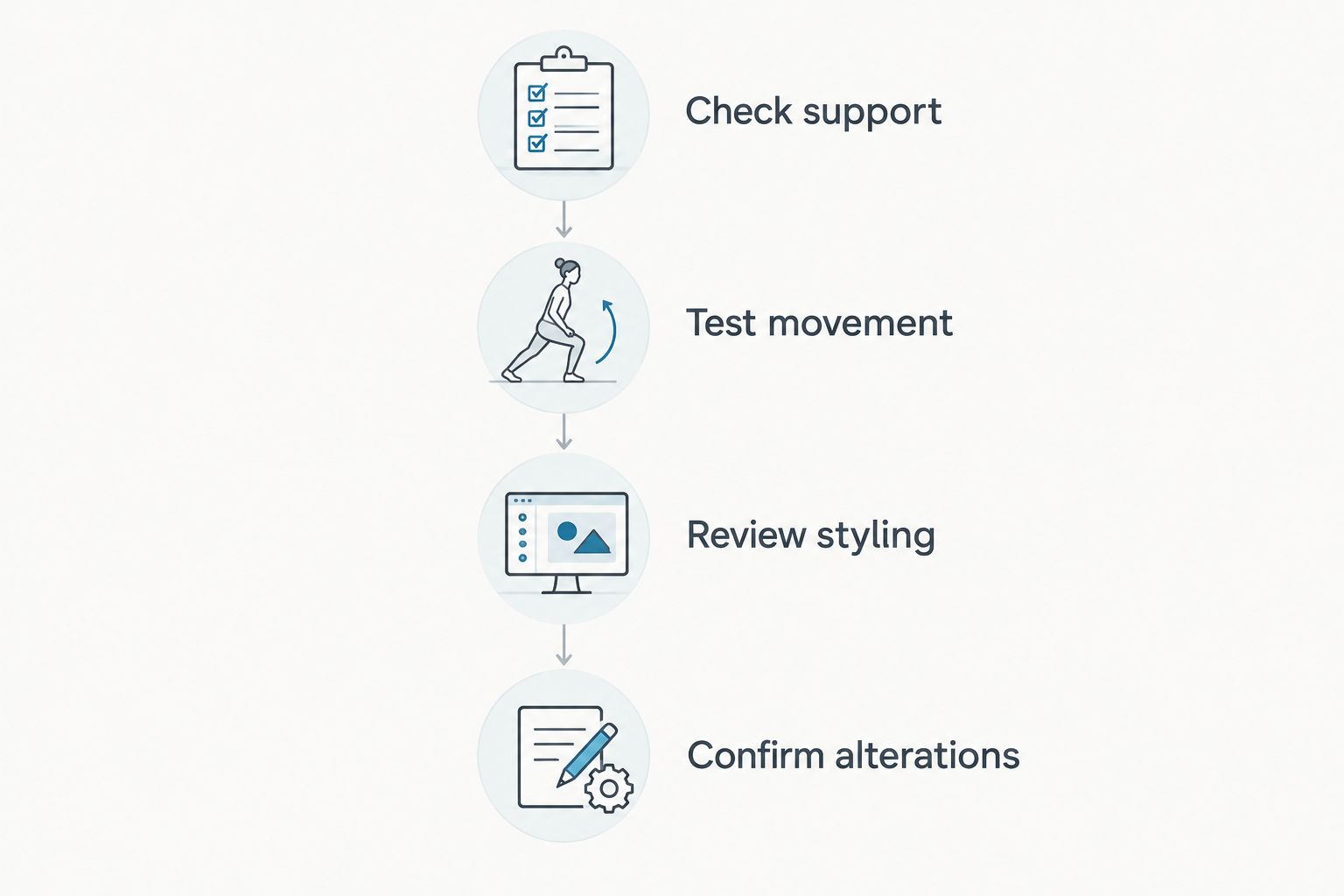
Use this fitting sequence to turn a visual preference into a practical decision:
- Check support. Explain where the bodice feels loose, restrictive or insecure, and ask what a qualified alterations specialist can assess.
- Test movement. Sit, walk, turn and lift your arms within the fitting space; notice what needs constant adjustment.
- Review styling. Add the intended accessories, then remove them to identify what each contributes.
- Confirm alterations. Get advice on the exact garment rather than assuming a size label establishes what is possible.
Your goal is not to pass a test. It is to understand whether the dress supports the experience you want, including the less photogenic parts of the day.
Is buying a sample-sale gown better than renting?
Buying a sample-sale gown suits brides who want ownership and an individually assessed alteration plan; renting suits brides who prefer temporary use and accept the agreed conditions. Neither route wins automatically, whether your style is classic or expressive.
For a 2026 comparison, request written totals and inclusions for each route. Compare the gown transaction alongside alterations, cleaning, transport, insurance where relevant, and any agreed charges or refundable deposits. Do not assume the same services are included.
| Route | Best for | Main benefit | Main responsibility |
|---|---|---|---|
| Sample-sale purchase | Brides who want to keep the exact gown | Ownership rather than temporary use | Assessing condition, tailoring feasibility, care and storage |
| Rental | Brides who want to wear rather than retain a gown | No need to keep the garment afterwards | Following the agreed alteration, handling and return terms |
For overseas brides, Carte Blanche offers worldwide shipping. That fact does not establish delivery timing, customs treatment or return terms for your particular transaction; obtain those details before planning around them.
Carte Blanche is best suited to brides comparing designer bridal gowns through both purchase and rental options. Confirm which arrangement applies to the specific gown you are considering rather than treating a sale listing as a rental offer.
Can a wedding dress be both timeless and trendy?
A wedding dress can combine familiar proportions with a distinctive detail. Decide which element you want to lead, then assess the whole outfit rather than forcing the dress into a single category.
Will I regret choosing a fashionable wedding dress?
A fashionable wedding dress does not determine future regret. Choose a feature you enjoy on yourself, test its practical effects and avoid treating social approval as the deciding criterion.
How do I choose a wedding dress from overseas?
Choose an overseas wedding dress by establishing the exact garment's measurements, condition, components and alteration requirements before purchase or rental. For a 2026 wedding, build your plan around confirmed dates from the boutique, carrier and alterations specialist, not an assumed standard timeline.
FAQ
What's better, a timeless or trendy wedding dress?
Neither is inherently better: choose the dress that reflects your taste and works comfortably for your celebration. Familiar proportions and distinctive details can also coexist in the same outfit.
Does a simple wedding dress always look timeless?
A simple wedding dress is not automatically timeless. Its proportions, neckline, fabric and styling still create a particular look, so choose simplicity because you enjoy it rather than because it promises future approval.
Can I wear a dramatic dress to a small wedding?
You can wear a dramatic dress to a small wedding. Check whether its volume and construction work for your actual space and activities rather than matching the dress to the guest count.
How can I get a different reception look without another dress?
A gown with a confirmed removable component can change the reception look without another dress. Eva Lendel Flame is described as having a detachable train; check its fastening and included components before planning the change.
Should I buy a sample-sale gown if I want alterations?
Consider a sample-sale purchase only after an alterations specialist assesses the exact gown. Ownership does not guarantee that every change is technically suitable or that the final fit will match your expectations.
Are the product-card figures rental prices?
The product-card figures are purchase sale or sample-sale prices, not rental prices. Request a separate rental quotation and written terms if you are considering temporary use.
What should I ask before ordering a wedding dress internationally?
Ask for the exact gown's measurements, condition, included pieces, transaction terms and shipping arrangements. Confirm local tailoring requirements and destination import obligations separately before committing.
One last thing
Try describing your favourite gown without saying timeless, trendy, flattering or bridal. Name what you actually love: the back, the fabric, the skirt's movement or how your shoulders feel in it.
That description is your clearest brief. Bring it to your next appointment, and let the dress answer it—not the label.